In the earthmoving industry, articulated dump trucks (ADTs) are the unsung heroes of jobsites. Designed to navigate rugged terrain, cross soft ground and move massive volumes of material, ADTs are critical to keeping projects on schedule and within budget and protecting your bottom line.
These modern workhorses didn’t appear overnight. In fact, our ADT legacy is backed by more than 50 years of engineering innovation, tracing directly back to the Norwegian company Moxy, which developed its first groundbreaking 6x6 prototype in 1972 and established the industry-standard bogie undercarriage.
To help you optimize your operations, I’ve answered the most frequently asked questions (FAQs) about ADT capacity, sizing and maintenance.
Whether you’re currently choosing an ADT for a new project or searching for actionable maintenance tips for ADTs, this guide provides essential insights you need to keep your fleet running smoothly.
What Are the Key Specifications of ADTs?
Q: What are the DEVELON ADT models currently available and their capacities?
A: We offer two ADT models tailored for moving large volumes of material like rock, dirt, sand and gravel. These are the DA30-7 and DA45-7. Both of these new -7 Series models are now available at North American dealerships. We have completely updated the ADT cab designs to significantly enhance operator comfort and visibility.
When evaluating ADT capacity, it is important to look at the payload capacity under realistic working conditions. Our machine specifications reflect a heaped capacity configuration equipped with a tailgate, which minimizes spillage and directly boosts jobsite productivity.
- DA30-7: Features a payload capacity of 28 metric tons.
- DA45-7: Provides a larger payload capacity of 41 metric tons.
Q: How does the physical design of the dump body impact these specifications and the truck’s overall performance?
A: The dump body configuration is central to how the truck handles its load.
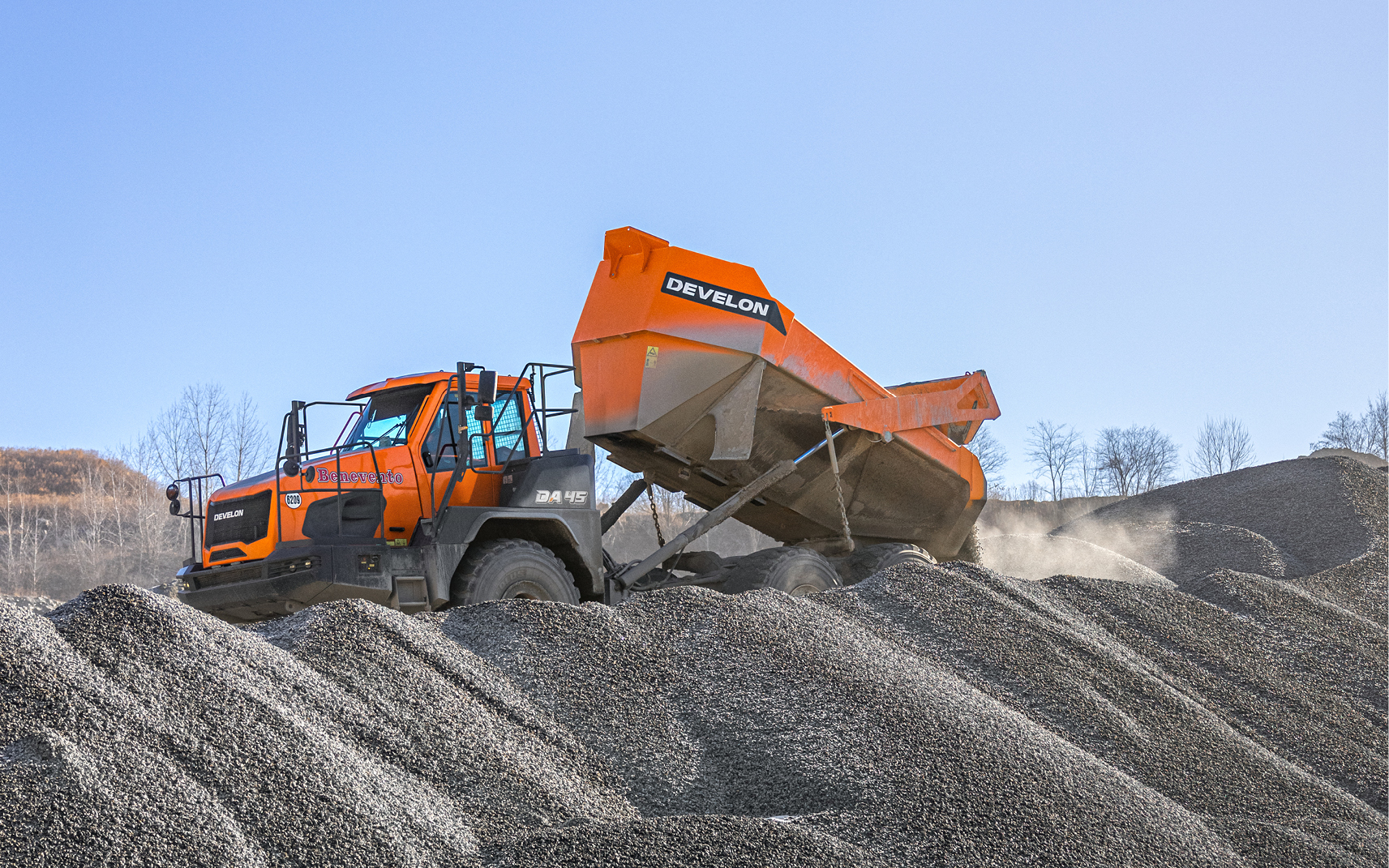
DEVELON utilizes a unique sloping bed design that naturally traps the weight of the material toward the center of the truck.
This lowers the truck’s overall center of gravity, which drastically improves stability, safety and traction by ensuring equal weight distribution across the axles.
By keeping all six wheels firmly planted on the ground, the truck can maximize its engine power and transfer raw torque directly to the ground without slipping.
To maintain efficiency in cold or wet weather, standard truck bed heaters divert warm engine exhaust through specialized channels into the dump body.
This process warms the bed and loosens sticky material. It also eliminates “carryback”: the leftover dirt that sticks to the bed and robs you of your payload capacity on subsequent cycles.
For highly abrasive environments, body liners and side extenders are available to mitigate long-term wear and tear on the trucks.
How Do Ground Conditions Affect ADT Selection?
Q: When choosing an articulated dump truck, what factors should be considered to select the right size?
A: Choosing an ADT is never a one-size-fits-all decision. Proper ADT sizing depends heavily on four variables.
- Terrain
- Material type
- Target payload per cycle
- Haul distance
The DA30-7 is best suited for small to midsize earthmoving projects. It excels in soft ground conditions because its design exerts lower ground pressure. This allows it to traverse muddy or unstable terrain where larger trucks might bog down.
Conversely, the DA45-7 is designed for large-scale construction and quarry operations. The truck maximizes your payload per cycle over longer haul distances to help you hit your daily production targets.
This sizing strategy plays out daily at Benevento Companies. As the company expands its footprint across Massachusetts and into New Hampshire sandpits and quarries, the employees rely heavily on DEVELON DA45-5 articulated dump trucks.
For their high-volume operations, which range from developing new quarry benches to hauling raw feed to processing plants, the ADTs represent the ideal size to keep pace with heavy production demands.
Q: How strictly should operators adhere to slope limits when operating these trucks across varied terrain?
A: While specific gradability will always vary based on the application and ground conditions, the recommended maximum slope for standard operations is a 15% grade, which is approximately 8.5 degrees.
Although DEVELON ADTs are physically capable of driving on steeper inclines, doing so routinely is not recommended because it accelerates drivetrain wear and compromises overall jobsite safety.
Which ADT Maintenance Practices Are Most Important?
Q: What are the core pillars of effective articulated dump truck maintenance?
A: To maximize fuel efficiency and prevent unexpected downtime, it’s vital to establish strict inspections and preventive maintenance routines. The foundation of ADT maintenance comes down to the following three areas:
- Tire management
- Articulation joint lubrication
- Braking system care
Proper tire maintenance is paramount. Tires represent one of the highest operating costs on an ADT, and managing them properly involves three core steps.
- Inflation: Air pressure must be adjusted continuously based on seasonal temperatures (cold vs. warm environments) and the changing conditions of your haul roads. Underinflated tires increase rolling resistance, which rapidly decreases fuel efficiency and drives up fuel costs.
- Daily inspections: Operators should conduct walk-around inspections every day to check for deep cuts, embedded debris and signs of uneven wear. Fortunately, our tandem bogey undercarriage design ensures equal weight distribution, which naturally promotes even tire wear across all six tires.
- Payload management: Consistently overloading the truck bed puts excessive structural stress on the tire sidewalls and treads, leading to premature tire failure.
Q: What about the articulation joint? How do you keep the pivot point of the truck functioning smoothly?
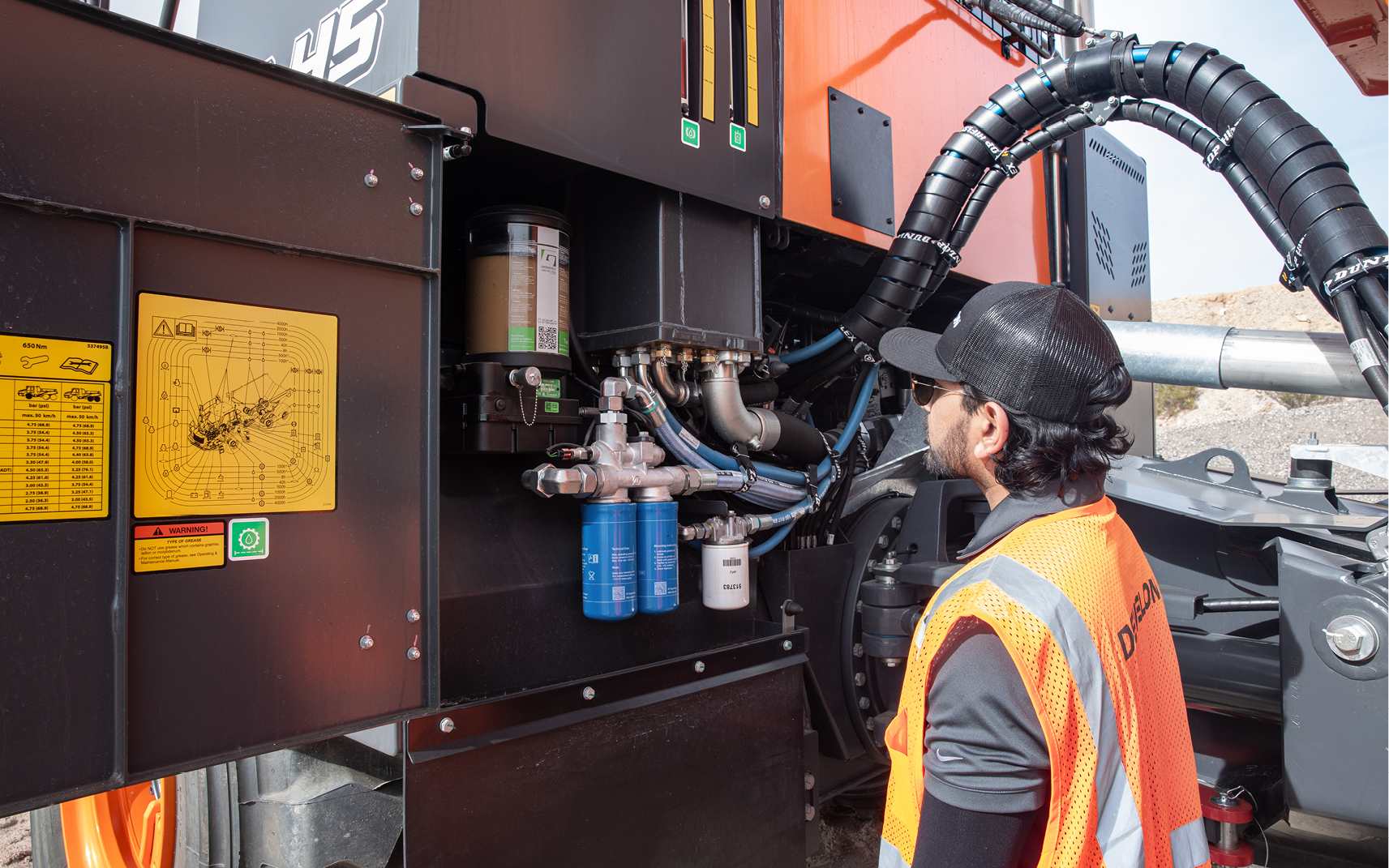
A: The articulation joint is the heart of an ADT, allowing the front truck and rear dump unit to move independently. The single most critical factor in keeping this joint maintained is proper lubrication.
While our trucks come standard with an automated lubrication system, the specific type of grease you use matters immensely. Use the specific, special four-ball greased recommended by the manufacturer rather than a generic alternative. Generic greases often fail to hold up under the extreme oscillating pressures of heavy hauling, which can lead to catastrophic, premature joint failure.
How to Extend the Lifespan of an ADT?
Q: Beyond standard daily checks, what proactive strategies can fleet managers deploy to extend the lifespan of their equipment?
A: Long-term durability is a product of operating the machine strictly within its engineered boundaries and utilizing high-quality OEM parts during service intervals.
One major area where you can preserve the machine’s lifespan is through smart utilization of the integrated braking systems. DEVELON ADTs come with four distinct braking systems.
- Engine brakes
- Service brakes
- Parking brakes
- Hydraulic transmission retarders
To extend the lifespan of the service brakes, use the hydraulic retarder as the primary means for controlling and maintaining constant speeds when traveling down slopes. This prevents the service brakes from overheating and wearing out prematurely.
Our new -7 Series trucks offer automatic hill-assist and Auto-Hold brake features, which prevent the trucks from rolling backward on steep inclines and eliminates unnecessary stress on the drivetrain during start-stop operations.
What are Common Mistakes When Sizing ADTs?
Q: What is the biggest misstep contractors make when it comes to ADT sizing and jobsite integration?
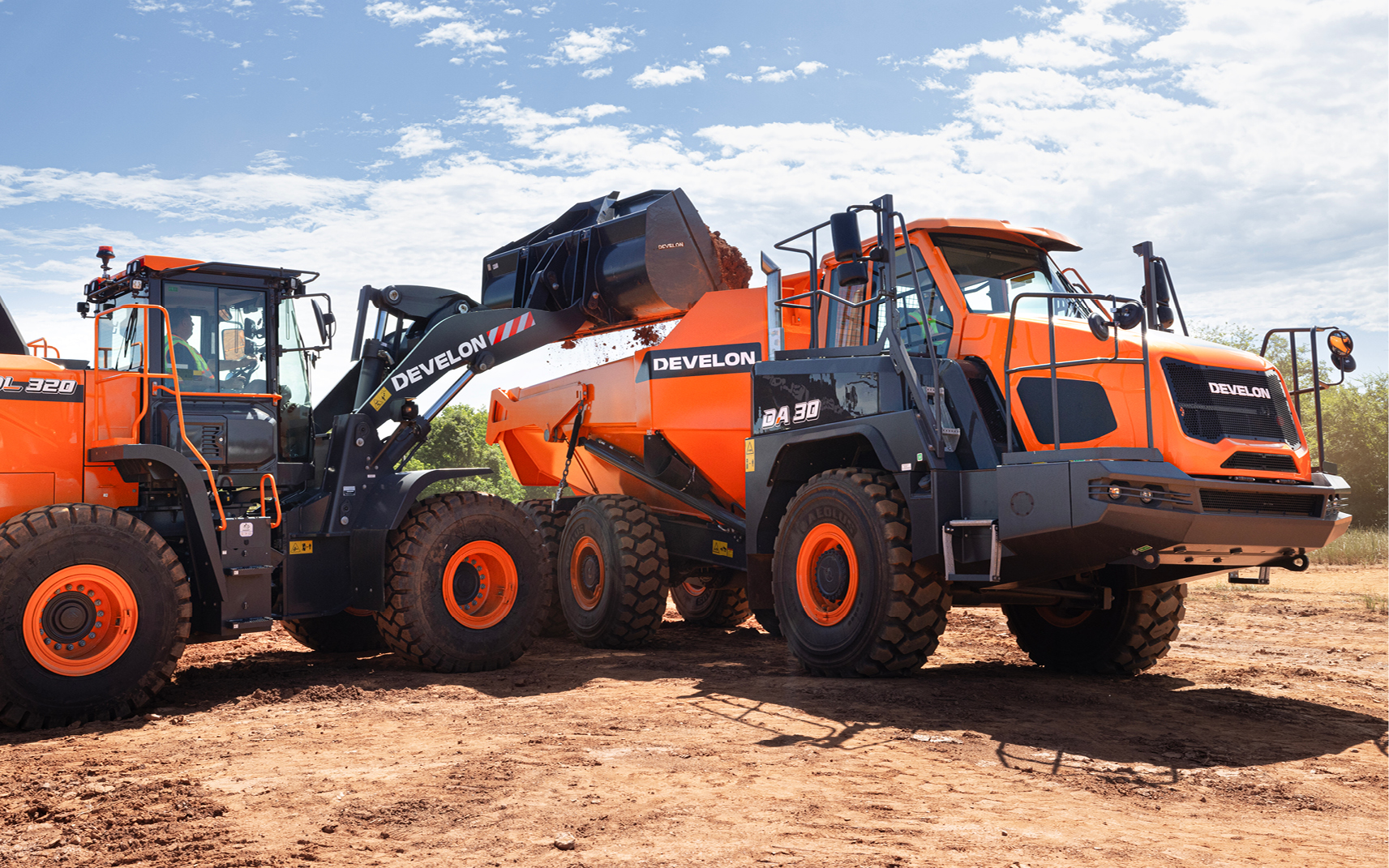
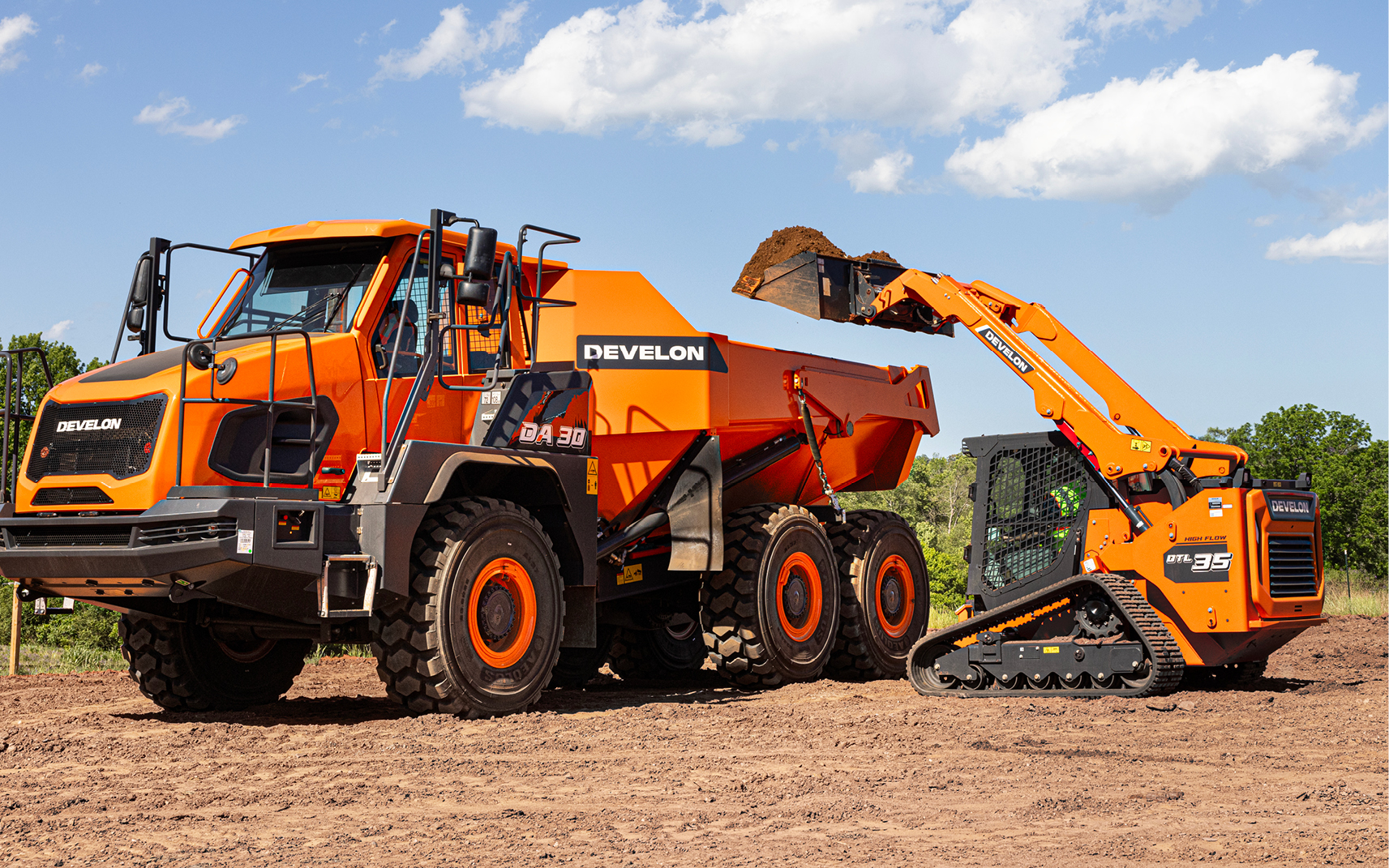
A: The most common mistake is failing to properly match the size of the loading equipment to the ADT capacity, whether it’s an excavator or a wheel loader. Mismatched equipment destroys jobsite productivity and accelerates wear and tear on both machines.
If the wheel loader bucket is too small, it takes too many passes to fill the truck, which extends cycle times and leaves the ADT idling inefficiently. If the wheel loader is too large, it can easily overload the truck in a single pass, shocking the suspension and tires. Your goal should be to fully load the truck bed within three to five wheel loader bucket passes.
To help eliminate guesswork, the overload protection system comes standard on the DEVELON DA45-5. This system features an external, traffic-light indicator (green, yellow and red) mounted on the outside of the cab.
This allows the excavator or wheel loader operator to see exactly when the truck has reached its optimal payload capacity without having to guess. Simultaneously, an internal digital display provides the truck driver with a precise, quantifiable payload value.
Use our Equipment Matching Guide to help you select the best excavator or wheel loader size when filling an ADT.
Equipment Matching Guide
|
DEVELON ADT Model |
Payload Capacity |
Recommended Excavator Size* |
Recommended Wheel Loader Bucket* |
|
DA30-7 |
28 metric tons |
35 to 50 tons |
6 to 8 cubic yards |
|
DA45-7 |
41 metric tons |
50 to 90 tons |
8 to 10 cubic yards |
*These pairing recommendations serve as a general guideline for optimizing cycle times and protecting equipment from premature wear. Actual matching requirements may vary based on specific jobsite factors, including material density, haul road grades and target production rates. Consult with your local DEVELON dealer to tailor a machine pairing specific to your application.
How Can Operator Training Impact ADT Maintenance?
Q: How does driver training fit into the larger equation of machine productivity and preventive maintenance?
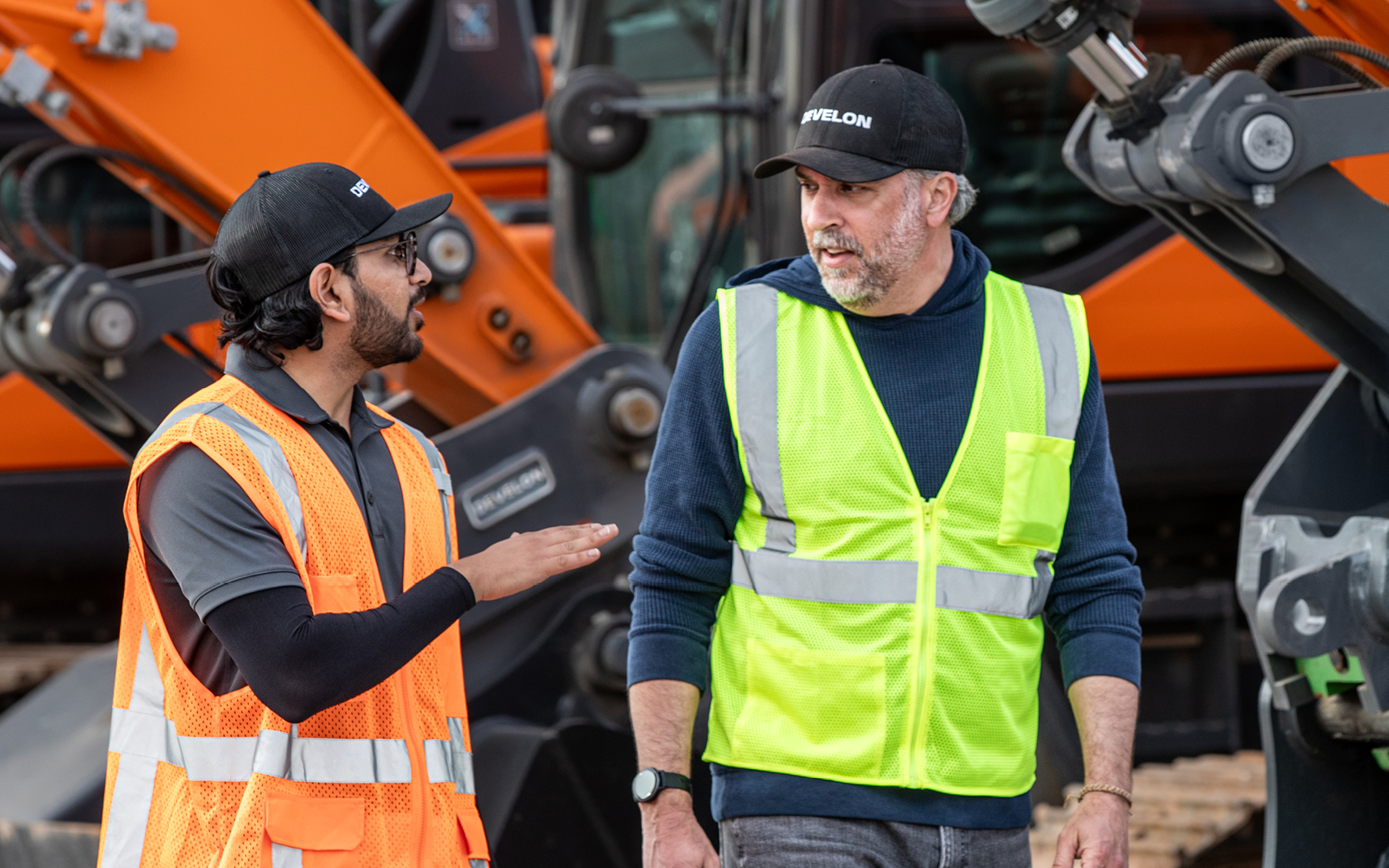
A: Operator training is often the missing link in a comprehensive maintenance strategy. While DEVELON ADTs are designed to be among the simplest and most intuitive trucks on the market to operate, a highly trained operator is infinitely more valuable to a fleet.
Properly trained operators directly reduce overall maintenance costs. For example, a trained driver knows how to moderate the hydraulic transmission retarder on downhill runs.
This shifts the burden of braking from the mechanical service brakes to the truck’s advanced hydraulic system, saving thousands of dollars in premature brake replacements.
An educated operator understands how to actively monitor the onboard payload weight system. By ensuring that they are never under-loading or over-loading the truck bed, they protect the tires, suspension and structural frame from unnecessary stress, keeping the machine running efficiently for years to come.
To take fleet oversight a step further, you can utilize the MY DEVELON fleet management system to track real-time machine health, fuel usage and idle times.
Learn more about DEVELON ADTs and how you can haul with confidence.
The most common mistake is failing to properly match the size of the loading equipment to the ADT capacity, whether it’s an excavator or a wheel loader. Mismatched equipment destroys jobsite productivity and accelerates wear and tear on both machines.”

Brandon Crockett, Articulated Dump Truck Product Manager
Brandon Crockett is the product manager for articulated dump trucks (ADTs) and bulldozers at DEVELON. He has more than 20 years of construction equipment experience in product, sales and marketing management.